
Accessible pipe repair, $200–$500
A burst you can point at, exposed pipe in a garden, garage or accessible wall, cut out and repaired in business hours.
First we stop the water. Then we find the actual split, not just where the water shows up, which is rarely the same place, and repair it properly. On call around the clock across Ambarvale and the Macarthur.
The pipe generations tell the story. Ambarvale’s older housing carries mid-century copper that pinholes from the inside as decades of water chemistry thin the wall; galvanised steel that rusts at every thread until a fitting surrenders; and somewhere in most renovated homes, a junction where three eras of pipework meet, original metal, nineties plastics, modern PEX, each joint a small bet that has to keep paying off. High mains pressure across parts of the Macarthur collects on those bets eventually.
What makes bursts genuinely tricky is that water lies about its address. It tracks along pipe exteriors, rides joists and wall plates, and surfaces downhill: a stain in the lounge from a split above the laundry. Open the ceiling at the stain and you find wet plaster and no pipe. So we do not guess: the line gets traced back to the actual failure, the failed section comes out, and the repair is pressure-tested against the mains before a single sheet of plaster goes back.


The reactive clay across these hills swells and shrinks with the seasons, flexing and fracturing older sewer lines beneath the ground.
On a slab home in reactive ground, differential movement between the slab and the surrounding soil is a real force acting on anything crossing that boundary. Pipes entering the slab edge take the strain.
A leak under a slab is the expensive version of this problem, and it is worth finding precisely before anyone cuts concrete. Acoustic and thermal location gets it to within a small area, which is the difference between a patch and a floor.
On sloping ground water leaves a failed pipe and travels, following the easiest path under the surface until something stops it. It can emerge metres downhill, in a neighbour's yard, or against a retaining wall.
Ambarvale’s hillside streets funnel heavy-rain runoff downhill through stormwater pits that silt up and back up fast.
So digging where the water appears is usually digging in the wrong place. Correlation and acoustic equipment work uphill from the symptom, which on a steep block routinely saves several metres of unnecessary excavation.
Not every escape of water is a burst pressure pipe. A cracked or collapsed drain leaks too, slowly, without a pressure drop, and often for months before anything shows.
The distinction matters because the repairs are different jobs at different prices. A pressure leak shows on the meter with every tap closed; a drain fault does not, and it is found with a camera rather than a listening device.
Reactive soil swells when wet and shrinks when dry, and it does not do either evenly across a block. Pipes bedded in it are pulled at their least flexible points, which are the joints and the places where a line enters a slab or wall.
The failures cluster at the change of season rather than in the depths of either one. A long dry spell broken by heavy rain is the classic trigger.
A cracked earthenware line under the yard can lose water into the ground indefinitely without a single visible symptom. The soil takes it, the grass over it looks slightly better than the rest, and nothing backs up because the line still flows.
The damage is not the lost water, it is what saturated ground does to footings and to the bedding under the pipe itself. A line leaking into its own trench undermines its own support, which is how a crack becomes a sag and then a collapse.
A burst you can point at, exposed pipe in a garden, garage or accessible wall, cut out and repaired in business hours.
Adds careful access and tracing the water back to the real split before repair.
Locating equipment, access through concrete or excavation, or a reroute around the slab. The camera and leak gear keep the hole small.
Nights and weekends run roughly $180–$250/hr against $120–$160 in daylight, plus the call-out. Shutting the meter and waiting for morning is sometimes the smart money, we will say so.
Professional leak detection for the first hour, before anything is opened up. Cheaper than exploratory holes in three walls.
Every repair leaves pressure-tested and carries a lifetime workmanship warranty. Figures here are indicative of the 2026 Sydney market rather than a quote from us, you get your own number as a fixed price before any work starts.
On the phone: meter valve, clockwise, done: the flooding stops before we have left the depot. On site, we isolate just the affected line where possible so the rest of the house stays on.
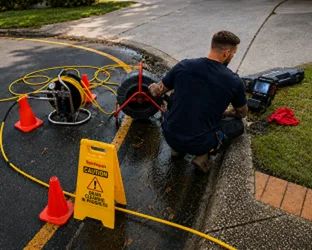
Water surfaces downhill of the failure, so we trace: acoustic gear, thermal imaging or pressure testing for concealed lines, before anything is opened up.

The failed section is cut out and replaced, not bandaged. If what we expose says the whole run is at end of life, you get that assessment straight, with numbers for both paths.

Pressure-tested against the mains before any wall, floor or trench is closed. You see it holding before we leave.
Shut the meter valve, then call. We will talk you through making it safe while a crew heads your way.
What people ask us with the water off, answered before you need them.

Water off? Good: now let us get it back on. Fixed price before the repair starts, pressure-tested before we leave.

Leave your details and our local Ambarvale team will call you back fast.